

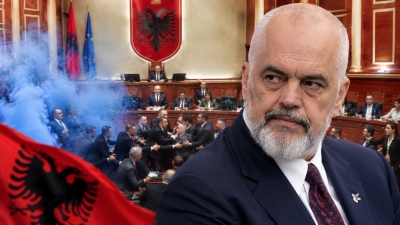
The massive brawl between MPs in Tirana constitutes not an isolated incident, but another episode of a political crisis deepening daily and bringing ever-greater pressure onto the government of Edi Rama
Images from Albania's Parliament quickly made the rounds in Balkan media. MPs from the ruling party and the opposition exchanged insults, shoves, and fists during a session of the National Assembly, converting parliament into a conflict zone. Yet behind the striking images of wild brawls lies a far deeper crisis. Albania is traversing perhaps its most turbulent political period in recent years, with street protests continuing for more than ten days and political polarization taking on unprecedented dimensions.
The session that ended in a brawl
According to information from Tirana, tension began with verbal confrontations between government and opposition MPs. However, the situation quickly spiraled out of control. Verbal exchanges turned into shoving, followed by a generalized brawl inside the parliamentary chamber. Although parliamentary clashes do not constitute a rare phenomenon in Albanian political life, several observers note that yesterday's session reflects the climate of extreme polarization prevailing across the entire country.
Ten days of protests
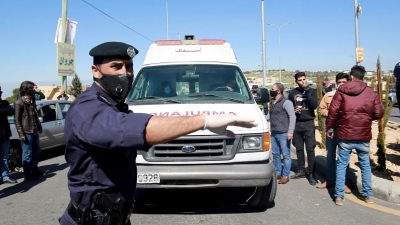
The parliamentary incident occurred while Albania already finds itself in deep turmoil. For about ten days now, massive demonstrations have been taking place in Tirana and other cities, involving students, academics, social organizations, and citizens not necessarily affiliated with any party. Protesters have blocked major roads, while in certain instances attacks occurred against public buildings alongside clashes with security forces. The central demand of the movement is the resignation of Prime Minister Edi Rama.
The opposition senses an opportunity
Mobilizations offer the opposition an opportunity it had been seeking for years. The Democratic Party openly supports the demonstrations, attempting to convert popular discontent into political pressure against the government. This precisely explains the climate that prevailed in parliament. Political differences are no longer restricted to parliamentary debates; they have spilled into the streets and return back to state institutions in the form of extreme confrontation.
Rama's response
The government insists it will not back down under the pressure of mobilizations. In recent days, authorities have increased police presence, while government officials cite the necessity of protecting public order. The opposition accuses the government of authoritarianism, whereas the government accuses the opposition of attempting to exploit social unrest for political gain. This vicious cycle continuously feeds the tension.
Another warning signal from the "powder keg of Europe"
Albania's case presents interest for a broader reason as well. In recent months, the Balkan Peninsula has experienced successive waves of social and political tension. In Serbia, student mobilizations and the Novi Sad tragedy triggered unprecedented political turmoil. In Bosnia and Herzegovina, serious political disputes remain open. In Kosovo, tensions with the Serb population persist. Now Albania is added to this landscape of instability. Of course, each country possesses its own peculiarities; however, developments show that social discontent is accumulating across several points in the region, capable of turning into instability.
Amid violent protests in #Albania, opposition and ruling majority MPs physically clashed in Parliament this Thursday. #Protest https://t.co/uIHtHYi6K1
— Isa Myzyraj (@IsamyzyrajAlb) October 22, 2026
The big picture
The most significant element of recent days is not the physical brawls in Parliament, but the fact that the crisis has ceased to be confined to the streets. When polarization shifts from demonstrations to parliament, when the opposition openly backs mobilizations, and when the government responds with increasingly harsher rhetoric, political confrontation enters a new phase—potentially its final phase. For now, Edi Rama retains control of power. However, images from Tirana show that Albania has entered a period of heightened political instability, the end of which remains uncertain... And the wild brawls in Parliament may prove less important than the question emerging behind them: whether the social crisis seen on the streets can ultimately evolve into a broader political crisis for the Albanian political system. Everything is now wide open...
www.bankingnews.gr


Σχόλια αναγνωστών